
NXP 74HC257D: A Comprehensive Guide to the Quad 2-Input Multiplexer with 3-State Outputs
In the realm of digital logic design, efficiently routing and selecting data is a fundamental requirement. The NXP 74HC257D stands as a quintessential component for this very task. This integrated circuit is a high-speed Si-gate CMOS device that provides four independent 2-input multiplexers in a single package, each featuring 3-state outputs for superior bus-oriented applications.
The primary function of the 74HC257D is to select one of two binary data sources (1A/1B, 2A/2B, etc.) and route it to its output pin. The selection is governed by a common select input (S). A low logic level on S connects the A inputs to the Y outputs, while a high logic level connects the B inputs. This makes it an invaluable tool for data routing, signal gating, and parallel-to-serial conversion.
A defining feature of this multiplexer is its 3-state output. Unlike standard outputs that can only be high or low, a 3-state output can enter a third, high-impedance (high-Z) state. This is controlled by a common output enable pin (OE, active low). When OE is high, all outputs are effectively disconnected from the internal circuit. This is critical for preventing bus contention in multi-device systems, such as microprocessors or data buses, where multiple ICs share the same communication lines. Only one device can drive the bus at a time; the others must be in a high-Z state to avoid short circuits and data corruption.
The "HC" family designation indicates that the device operates at CMOS voltage levels (2.0 to 6.0 V) while offering high-speed performance and low power consumption, similar to the LSTTL logic family. This combination of speed and low static power dissipation makes it suitable for a wide array of portable and battery-operated equipment.
Typical applications for the 74HC257D include:
Data Multiplexing: Combining data from multiple sources onto a single line for transmission or processing.
Memory Address Decoding: Selecting different banks of memory or peripherals.
Bus Systems: Facilitating bidirectional data flow on shared bus architectures.
Function Selection: Choosing between different operational modes or input signals in a digital system.
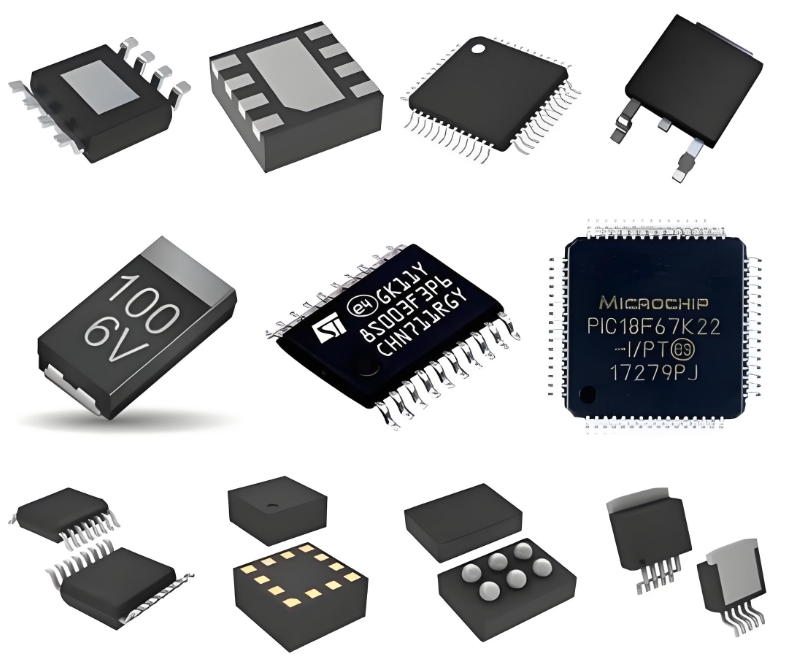
Housed in a standard 16-pin SOIC package (D), the 74HC257D offers a compact and robust solution for modern PCB designs.
ICGOODFIND: The NXP 74HC257D is a versatile and efficient solution for data selection and routing challenges. Its integration of four multiplexers, combined with the essential bus management capability of 3-state outputs, makes it a cornerstone component for designing conflict-free, high-density digital systems, from simple logic circuits to complex microprocessor interfaces.
Keywords: 3-State Outputs, Data Multiplexer, Bus Contention, Output Enable (OE), CMOS Logic

